Why Digital Product Passports matter for battery manufacturers
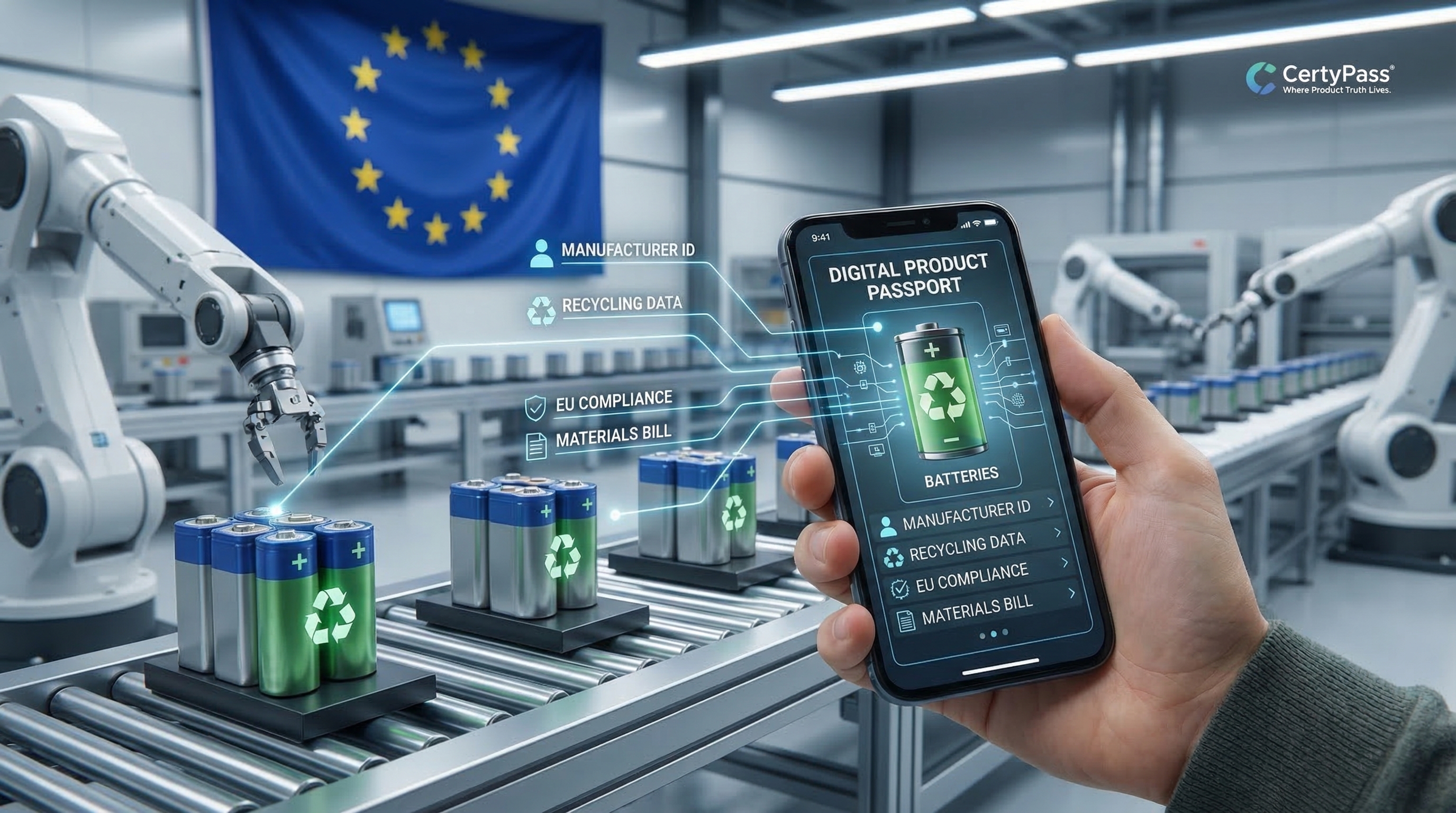
Introduction to the Digital Product Passport in the Battery Sector
The global transition towards electric mobility and renewable energy storage has placed batteries at the heart of European industrial strategy. However, this growth carries significant environmental responsibility. This is where the Digital Product Passport (DPP) comes into play—a digital tool designed to collect and share data about a product's lifecycle.
For battery manufacturers, the DPP is not just a recommendation; it is an imminent legal requirement stemming from the new EU Battery Regulation (2023/1542). This passport will act as a "digital identity" accompanying every battery over 2 kWh placed on the European market.
What exactly is the Battery Digital Passport?
The Battery Digital Passport is an electronic record accessible via a QR code or a unique identifier. Its goal is to provide transparency to consumers, repairers, recyclers, and regulators. The information scales from the origin of raw materials to the battery's state of health and its recyclability.
Tools like CertyPass solution are enabling manufacturers to manage this complex data in an automated way, ensuring that information is accurate, traceable, and secure through advanced technologies.
Key Requirements for Manufacturers
Manufacturers must prepare to report a vast amount of technical and sustainability data. Critical points include:
- Carbon Footprint: Detailed declarations of emissions generated during extraction, manufacturing, and transport.
- Recycled Content: Percentages of recovered cobalt, lithium, nickel, and lead that have been reintegrated into the new battery.
- Due Diligence: Supply chain information to ensure materials do not originate from conflict zones or involve human rights violations.
- Performance and Durability: Data on expected lifespan, charge cycle resistance, and behavior under different temperatures.
Benefits Beyond Regulatory Compliance
While the DPP emerges as a regulatory obligation, its implementation offers strategic competitive advantages for manufacturers who adopt solutions like CertyPass:
1. Circular Economy Optimization
By providing precise information on chemical composition, recyclers can recover valuable metals more efficiently. This reduces dependence on virgin raw materials and lowers production costs in the long run.
2. Boosting Battery Second Life
The Digital Passport provides insights into the "State of Health" (SoH) of an electric vehicle battery. If the battery is no longer suitable for automotive use but maintains high capacity, it can be repurposed for stationary energy storage, creating new business lines.
3. Consumer Trust and Transparency
In an increasingly environmentally conscious market, offering a product with full traceability becomes a seal of quality. Consumers and fleet companies will prefer suppliers who demonstrate total transparency in their processes.
The Role of CertyPass in Implementation
Digitizing a battery's entire value chain is a monumental technical challenge. Manufacturers face data silos and suppliers operating across different geographies.
CertyPass acts as the necessary technological bridge. Through its specialized digital passport platform, manufacturers can:
- Centralize information from multiple suppliers into a single secure ecosystem.
- Ensure data interoperability according to EU standards.
- Protect intellectual property through controlled access levels (showing only necessary data to each stakeholder).
Challenges in Implementation
We cannot ignore that the rollout of the DPP presents challenges. Data standardization is the primary hurdle; manufacturers must speak the same digital "language" as recyclers and authorities. Furthermore, information security is vital. Utilizing decentralized ledger technologies or robust platforms like those offered by CertyPass ensures that data remains untampered.
Conclusion
The Digital Product Passport for batteries has arrived to transform the industry. Those manufacturers who view this regulation not as a bureaucratic burden, but as an opportunity to digitize their processes and lead in sustainability, will be the ones to dominate the European market.
With the support of solutions like CertyPass, the path toward transparency and the circular economy is clearer. It is time for manufacturers to take the step toward responsible, efficient, and fully traceable production.