The EU Battery Regulation: Deciphering the Circular Future with the Digital Product Passport
Introduction to the New Regulatory Framework
Regulation (EU) 2023/1542 concerning batteries and waste batteries represents one of the most ambitious pillars of the European Green Deal. This regulation is not merely a technical update; it is a paradigm shift that redefines the entire lifecycle of batteries, from raw material extraction to final recycling. In a world moving toward massive electrification, Europe aims to ensure this transition is truly sustainable and transparent.
Why is this Regulation Necessary?
The demand for batteries is growing exponentially due to electric mobility and renewable energy storage. The EU's objective is threefold:
- Strengthen the internal market by ensuring common rules.
- Boost the circular economy by reducing dependence on critical raw materials.
- Reduce the environmental and social impact of battery production.
Battery Classification and Scope
Unlike previous regulations, this framework covers all categories of batteries placed on the EU market, regardless of their origin:
- Portable batteries (general use).
- LMT batteries (light means of transport like e-bikes or scooters).
- Electric Vehicle (EV) batteries.
- Industrial batteries.
- Starting, lighting, and ignition (SLI) batteries.
Key Sustainability and Safety Requirements
The regulation introduces strict requirements that will be implemented gradually:
1. Carbon Footprint
EV and industrial batteries must include a mandatory carbon footprint declaration. This will force manufacturers to optimize their production processes to minimize CO2 emissions.
2. Recycled Content
To foster the circular economy, the EU sets minimum levels of recycled content for materials such as cobalt, lithium, nickel, and lead. This ensures that old batteries become the resource for new ones.
3. Performance and Durability
Minimum performance and durability standards are established to prevent premature obsolescence, ensuring consumers purchase high-quality, long-lasting products.
The Battery Digital Product Passport (DPP) Revolution
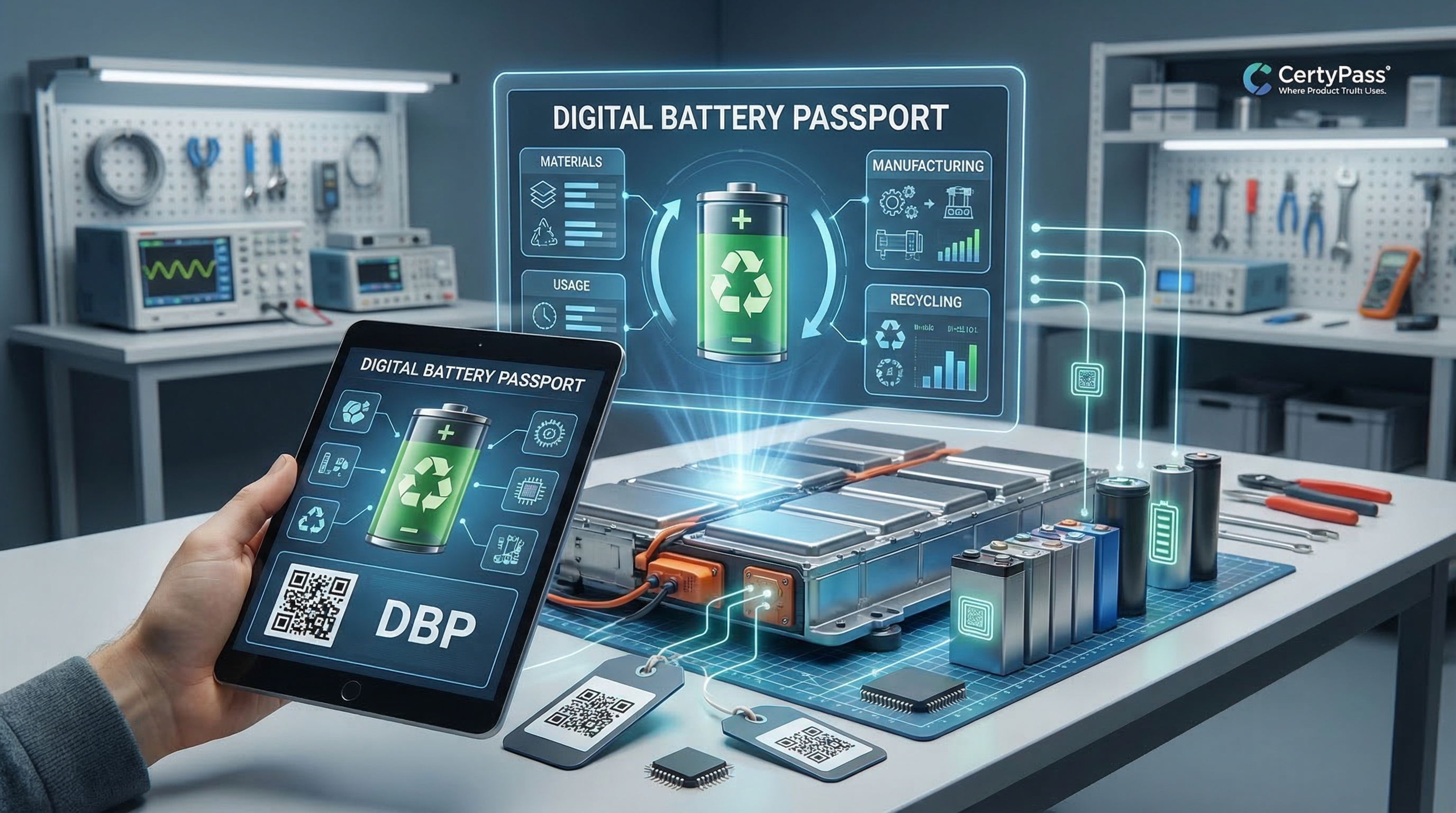
One of the most innovative elements is the Battery Digital Product Passport (DPP). Starting in February 2027, every industrial or EV battery with a capacity higher than 2 kWh must have a digital record accessible via a QR code.
This passport will provide detailed information on:
- Chemical composition and material origin.
- Detailed carbon footprint.
- State of Health (SoH) and charging capacity.
- Disassembly and recycling guidelines.
Technological Solutions: CertyPass and iPass
In this context of high technical demand, tools like CertyPass become indispensable. These platforms allow manufacturers to manage end-to-end traceability, ensuring that all data required by the EU is digitized, verified, and securely accessible to authorities and recyclers.
Extended Producer Responsibility and Recycling
The regulation tightens battery waste collection targets. For example, by 2030, a 73% collection rate for portable batteries is expected. Additionally, specific recycling efficiency targets are introduced to recover valuable metals with extreme purity, returning them to the European production cycle.
Conclusion
The EU Battery Regulation is a clear roadmap toward climate neutrality. While it poses a logistical and technical challenge for manufacturers, it also opens a historic opportunity for technological leadership. Implementing traceability solutions like the Digital Product Passport is not just a legal obligation but a competitive advantage to demonstrate a real commitment to sustainability.
Companies prepared with systems like CertyPass will not only comply with the law but will also generate unprecedented trust among their customers and business partners.